
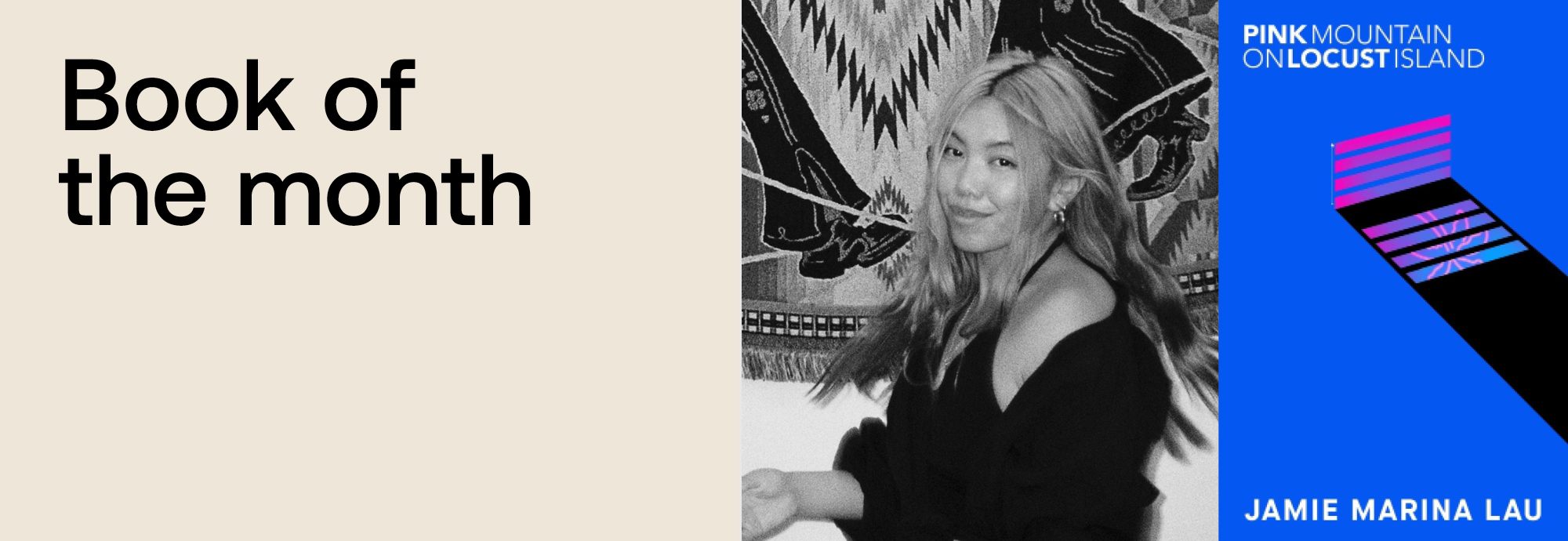
This month Stella celebrates Pink Mountain on Locust Island, shortlisted for the 2019 Stella Prize.
We spoke with Jamie Marina Lau to reflect on the novel, and the role of impulse and faith in the writing process.
What are you reading at the moment?
I’m mentoring at the moment so I’ve been all-in on my students’ manuscripts – which are brilliant, and that’ll be what I’m reading and absorbed in most days. Non-fiction on my e-reader for casual reading, I have The Yellow Emperor’s Classic of Medicine and The Society of the Spectacle by Guy Debord. The last novels before my mentoring season were Belladonna by Daša Drndić and Love Novel by Ivana Sajko!
Do you remember how you felt when you found out you’d been shortlisted for the 2019 Stella Prize?
It felt totally full circle for me and I felt so honoured it was the first big prize I was considered for.
You’ve said in previous interviews that Pink Mountain began as an exercise in a creative writing class – could you feel right away that this story had the potential to be something bigger?
Definitely, I think it’s that the words immediately felt energetic, and honest. In an in-class writing exercise, you don’t have time to decide how you want to come across or who it’s for or why you’re doing it. There’s an urgency to it. When I teach now, I love setting these in-session bursts because sometimes an idea or phrasing you didn’t even know you had in you comes out, there’s also this phenomenon that happens where everyone’s circling similar ideas and images. The automatic writing also reaffirms trust in yourself as a writer and reminds you that it’s all in you when you’re ready. I think the best work comes out of impulse and faith. I remember after that class I couldn’t stop thinking about it.
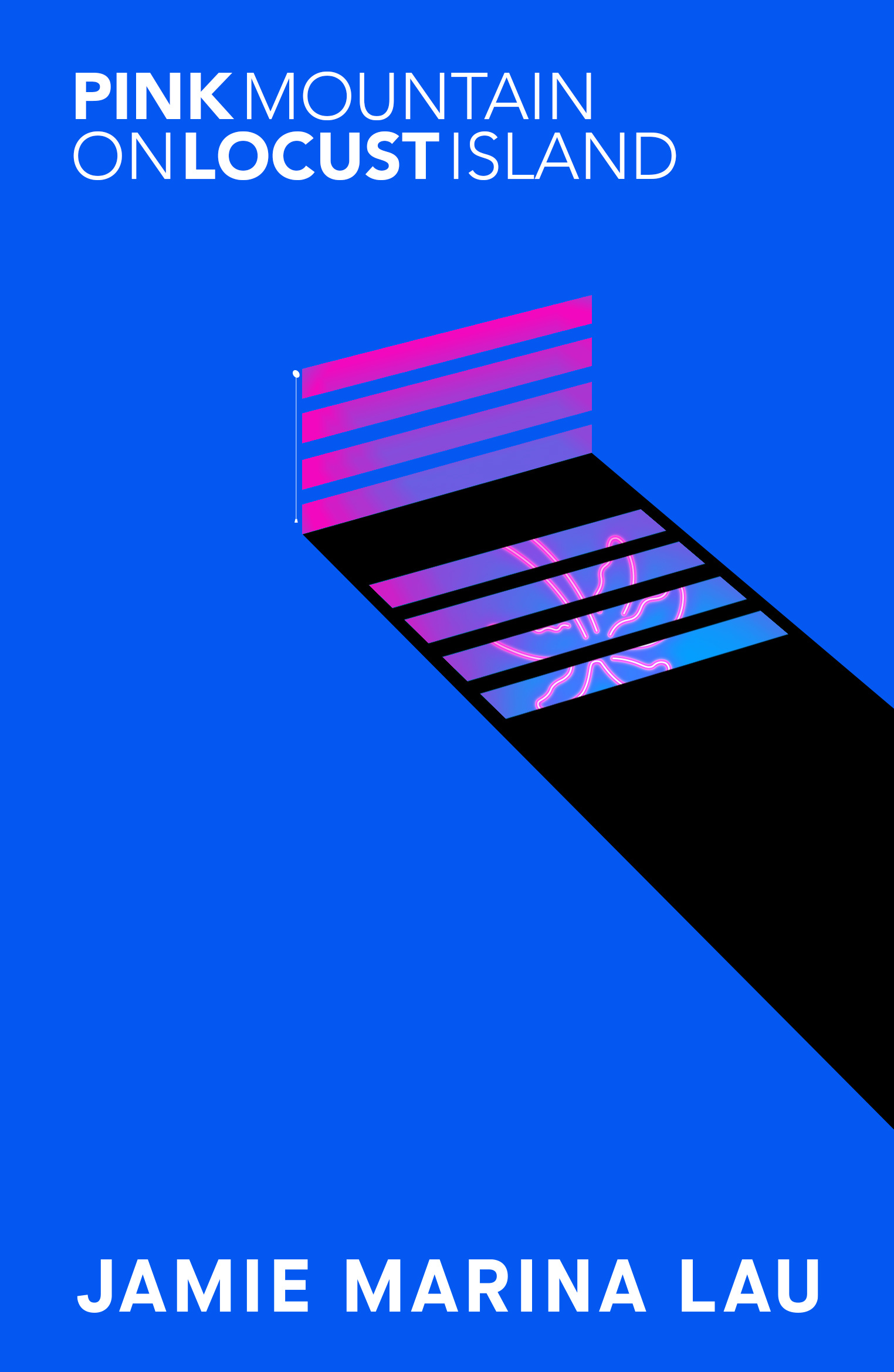
About the book
Monk lives in Chinatown with her washed-up painter father. When Santa Coy–possible boyfriend, potential accomplice–enters their lives, an intoxicating hunger consumes their home. So begins a heady descent into art, casino resorts, drugs, vacant swimming pools, religion, pixelated tutorial videos, and senseless violence.
In bursts of fizzing, staccato and claustrophobic prose, this modern Australian take on the classic hard-boiled novel bounces you between pulverised English, elastic Cantonese and the new dialect of a digitised world.
Reading this book is the literary equivalent of riding a rollercoaster while listening to a virtuoso violin performance by a child prodigy.
2019 Stella Prize Judges
It’s an ambitious, experimental debut. What drew you to play with form, and tell the story through a series of image-based vignettes?
Life felt like the vignettes at the time, the experiences I was having being in my late teens and early twenties – feeling like every moment was everything and nothing. I also struggled with school and reading growing up but I still loved reading novels. I loved it because it felt like something that was my own. In retrospect, I reckon the vignettes really became the whole thing because I thought: wouldn’t it be nice to experience the sense of fulfilment of reading an entire novel, but actually get through the entire thing because it’s laid out the way I need it to be laid out for my brain to process it? It sounds crazy but I’m not sure I’d gotten to the end of many novels before I started writing my own ones. I loved the feeling of a novel, I desperately wanted to engage with it, but the form was always challenging. So, the inspiration of the vignettes moved between its natural rhythm, personal convenience, and also I just loved how it looked on the page.
Judges report
This book is like nothing you have ever read before – a kaleidoscope of colours, smells and fragments of life observed by a teenager in a Chinatown somewhere in an unknown city.
In brilliant and quirky episodic snatches, Jamie Marina Lau tells the troubling story of teenage girl Monk, who lives a claustrophobic life in a small apartment, dominated by a brown couch and a television playing endless repeats of David Attenborough’s documentaries. Her father, a drug-addled former academic, provides little in the way of real or emotional nourishment. Into Monk’s life comes a prospective saviour in the form of nineteen-year-old artist Santa Coy. Monk struggles to find her own identity as Santa Coy is soon engulfed by her father’s fraudulent get-rich-quick art scheme.
Lau’s dizzying prose is like a series of crazy neon-lit performance art as she dissects, with extraordinary effervescence, Monk’s teenage angst, her struggles to fit in with her school friends, their parents, her father and her unhappily married sister.
Reading this book is the literary equivalent of riding a rollercoaster while listening to a virtuoso violin performance by a child prodigy. Simply stunning.
Your protagonist, Monk, is often like a fly on the wall. Did this role as observer help you create the world and story you wanted to tell?
Yes and that’s a great point! I tend to write from fly on the wall perspectives. I think if there’s anything autobiographical about the two novels I have out in the world, it’s that I feel like I’m moving constantly, pulled into starkly different universes, then I move onto the next without fully integrating or having all the questions answered. This style of life, which I think a lot of millennials and Gen Z experience, allows you to experience wild, compelling worlds and moments. You come out with half a story and then for me, in my writing, I fill the gaps.
Your second novel, Gunk Baby, is quite different to Pink Mountain in aesthetic and form, despite being written soon after. What books or other media influenced your style at the time of writing each novel?
I do believe the second novel is somewhat a reaction to the first, or retrospectively that feels like the case for me. Gunk Baby began as a one-page list of descriptors and idioms and I built it out. It was influenced by all the imageries and feelings and curiosities I craved to write after having my first publishing experience and focusing on one work for so long. It was like a wish list.
At risk of making you choose a favourite child, which was more exciting to write?
Haha! I think both were experiments that grew me as a writer and a person. Gunk Baby taught me I could make a novel into a collision of ideas, it took me through research that ended up being really important to me and made me super reflective of my place in the world. Pink Mountain on Locust Island felt free and buzzing and an honest reflection of girlhood. I guess I’ll just say there’s always something tender and special about the first novel.
What’s next for you? Tell us about your recent and upcoming projects.
I’ve begun mentoring this past year and I teach at the Lighthouse Writers Workshop, a literary centre based out of Colorado. This has been the most fulfilling thing for me lately. I love witnessing the process of writers discovering the power of their voice and just being really intentional and minute with craft together. I’ve also been spending a lot of time working on music. I find it’s what’s coming naturally to me right now during a more transitional time and I love the parameters of writing a song. I’ve also rekindled my love for the slow process of sound engineering. In terms of novels, I do have completed manuscripts and half-finished ones I’d been working on. It’s been good craft practice, but to call back to the third question, I want to wait for that feeling again before I share anything.
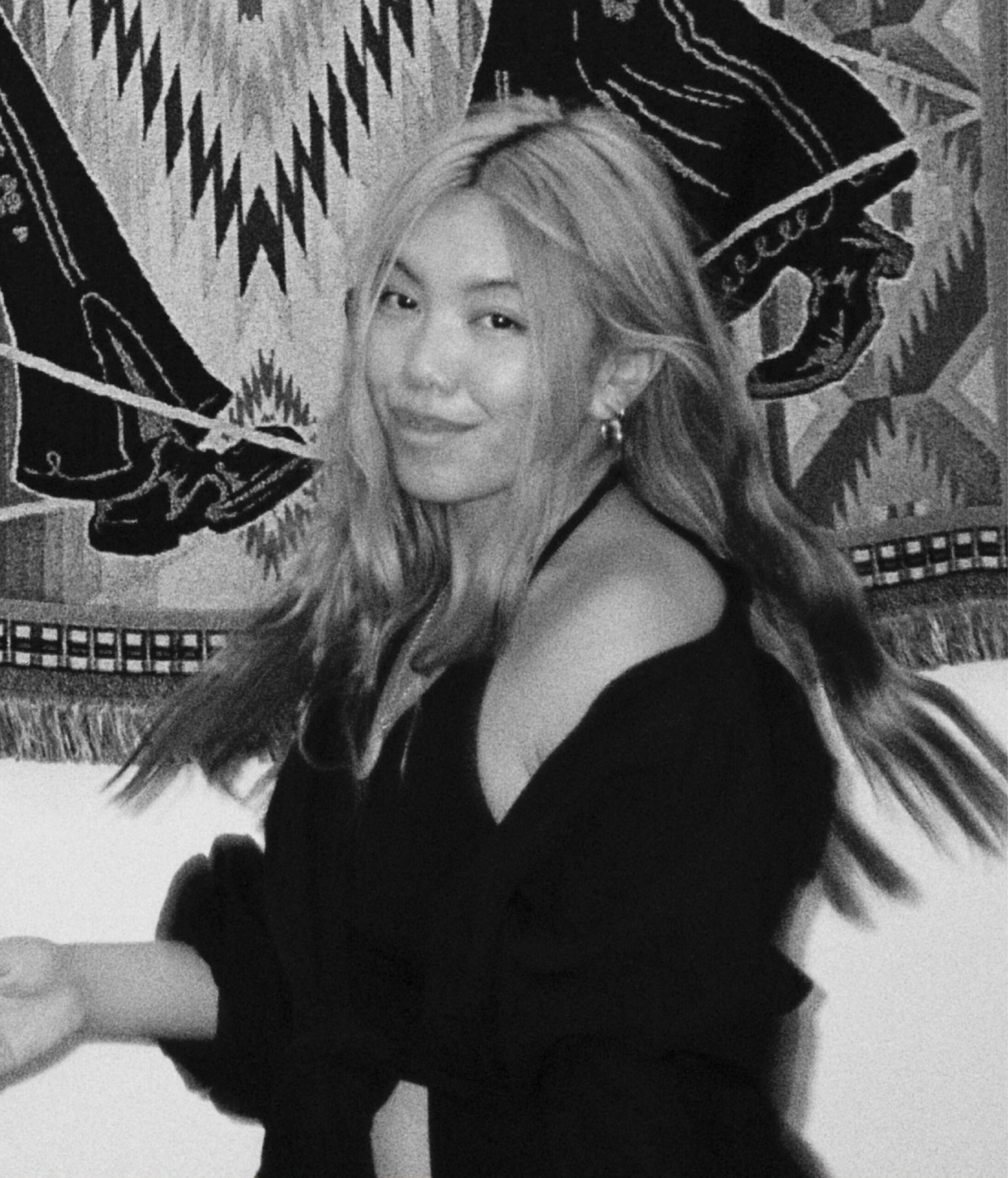
About the author
Jamie Marina Lau
Jamie Marina Lau is a writer, teacher, musician, and the author of Pink Mountain on Locust Island and Gunk Baby published by Hachette, Astra House and Coffee House Press. Jamie has served as the Australian representative at the Iowa International Writers Program, an Emerging Writers Festival Ambassador and a Red Room Poetry Youth Ambassador. Her prose has been praised by the New York Times for its exquisite precision. She teaches at the Lighthouse Writers Workshop. Updates for her upcoming workshops and offerings can be found on Instagram @winkysztar
Further reading
Reviews
“There is iridescence in this splatter artwork of a novel but, like its cover of light pink splotches against a matt black background, there’s also unknowingness and darkness.” Thuy On, The Australian
“Pink Mountain on Locust Island reads like a fever dream or a drug-induced hallucination. Jamie Marina Lau presents a surreal, electronic parable that sweeps us through the confusing hell that is Monk’s life growing up in the digital age.” Annie Zhang, Honi Soit
“Lau’s surreal prose captures the confusion of adolescence in the 21st century. Vivid, inventive descriptions of yum cha, high-school friendships and claustrophobic apartment living evoke the experience of growing up in a diasporic community and the sensory overload of being surrounded by people, yet still alone. A stylish yet moving glimpse into the loneliness of being a teenage girl, Pink Mountain on Locust Island heralds the arrival of an electric new Australian writer.” Kelsey Oldham, Books+Publishing
Explore the latest from Stella
This month Stella celebrates Pink Mountain on Locust Island, shortlisted for the 2019 Stella Prize. We spoke with Jamie Marina Lau to …
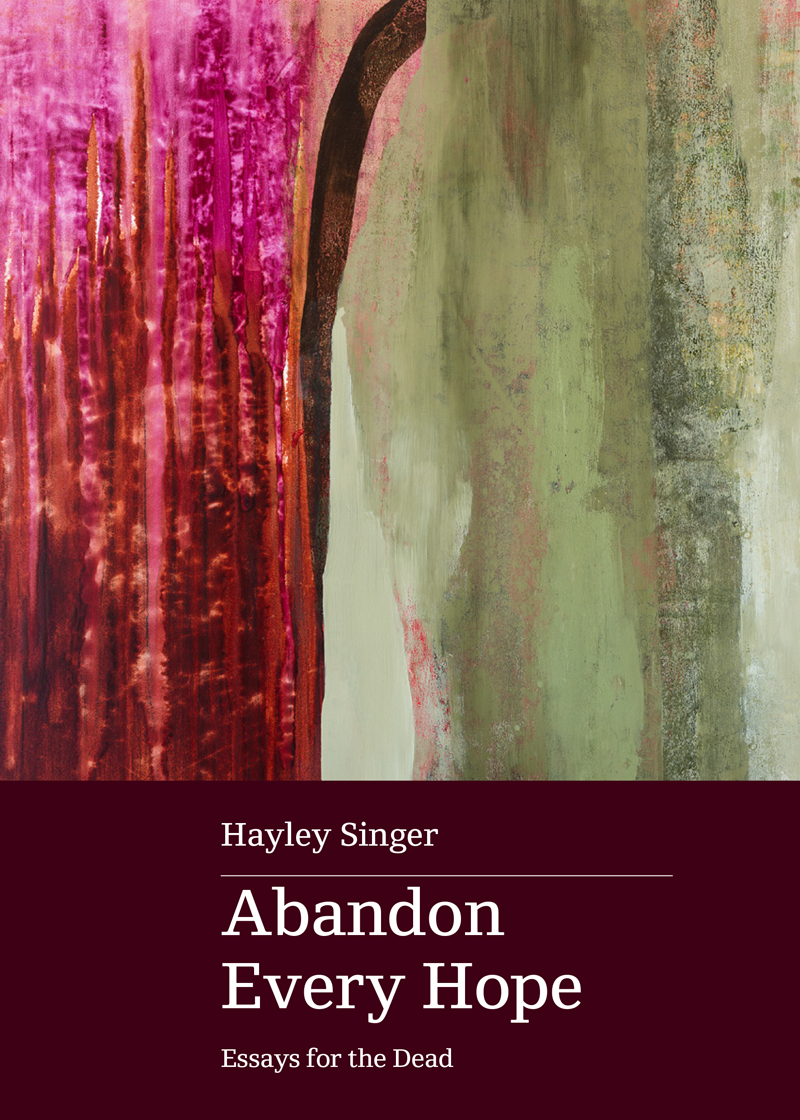
This month Stella celebrates Abandon Every Hope: Essays for the Dead, shortlisted for the 2024 Stella Prize. We sat down with Hayley …
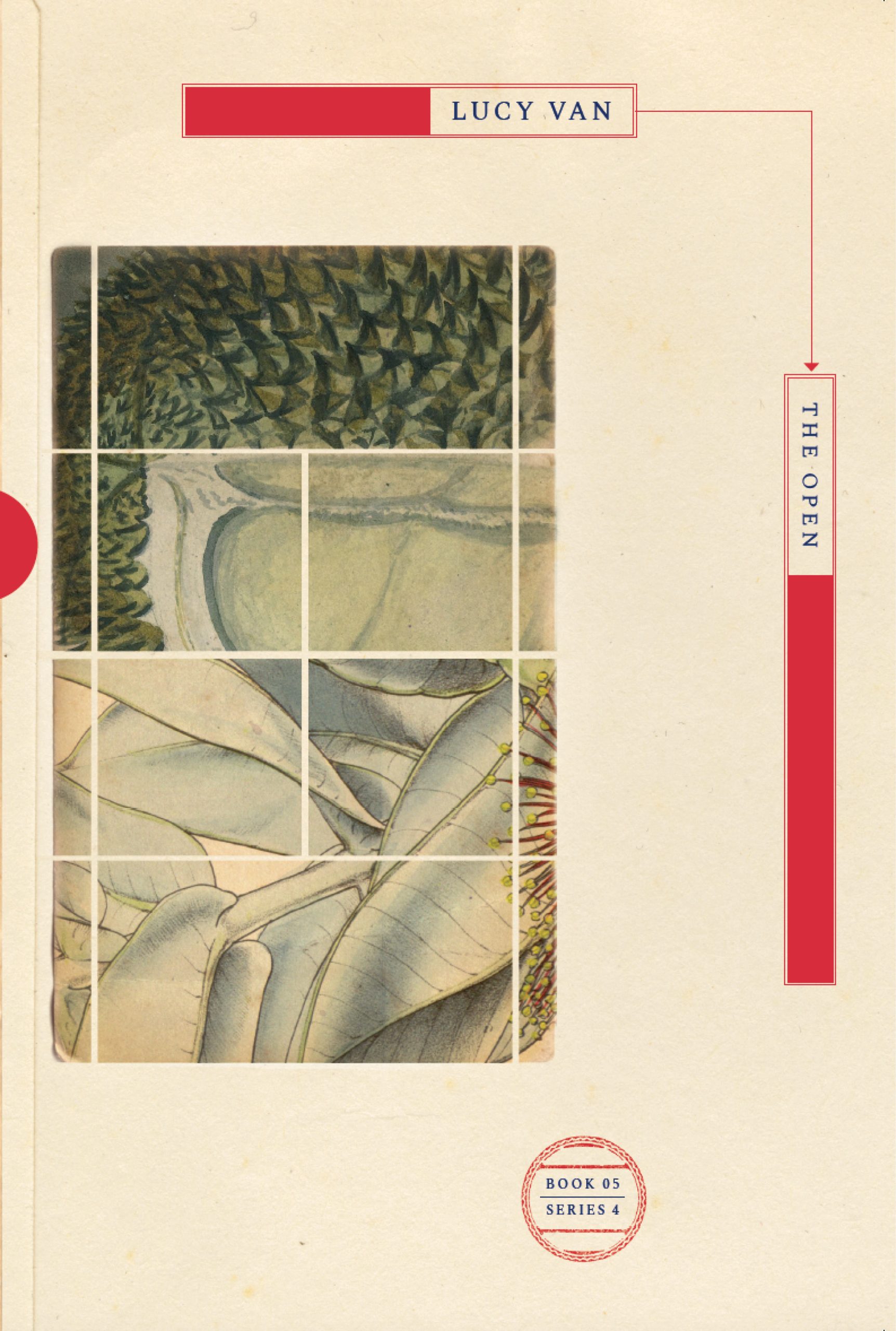
This month Stella celebrates The Open, longlisted for the 2022 Stella Prize. We sat down with Lucy Van to discuss the role …
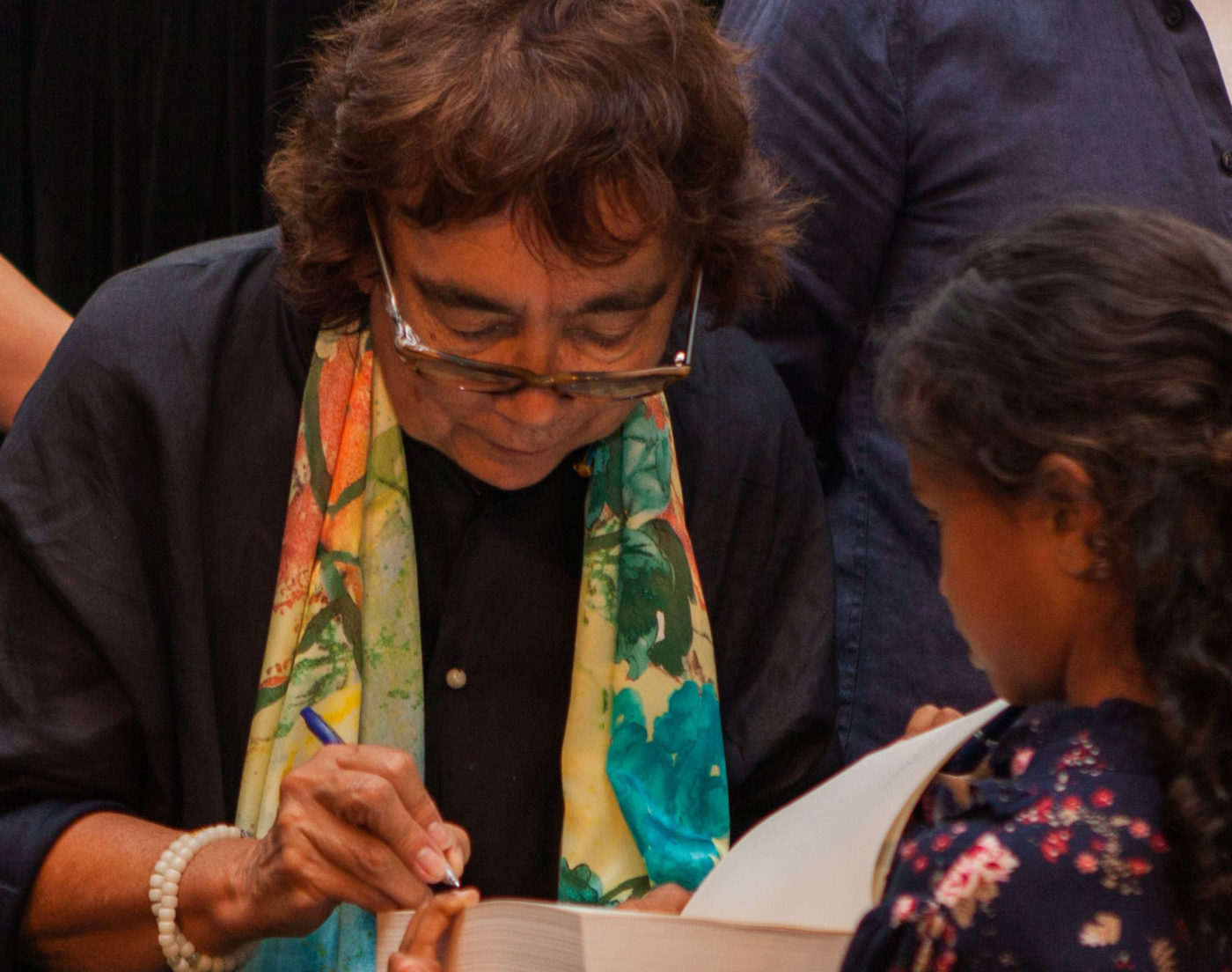
Help change the story
As a not-for-profit organisation with ambitious goals, Stella relies on the generous support of donors to help fund our work.
Every donation is important to us and allows Stella to continue its role as the leading voice for gender equality and cultural change in Australian literature.
Stella is a not-for-profit organisation with DGR status. All donations of $2 or more are tax-deductible.
SUBSCRIBE
Join our mailing list to stay up-to-date on Stella news, events and opportunities
Stella is grateful to the ongoing generosity of our supporters:
CONTACT STELLA
The Stella Prize Inc
info@stella.org.au
ARBN: 657 317 283
Stella acknowledges the Traditional Owners of the land throughout Australia and recognises their continuing connection to land, waters, community, and culture.
We pay our respect to Elders past and present and, through them, to all Aboriginal and Torres Strait Islander people.
Website design canyonbrand.com