Letter from the 2026 Stella Prize Chair of Judges, Sophie Gee
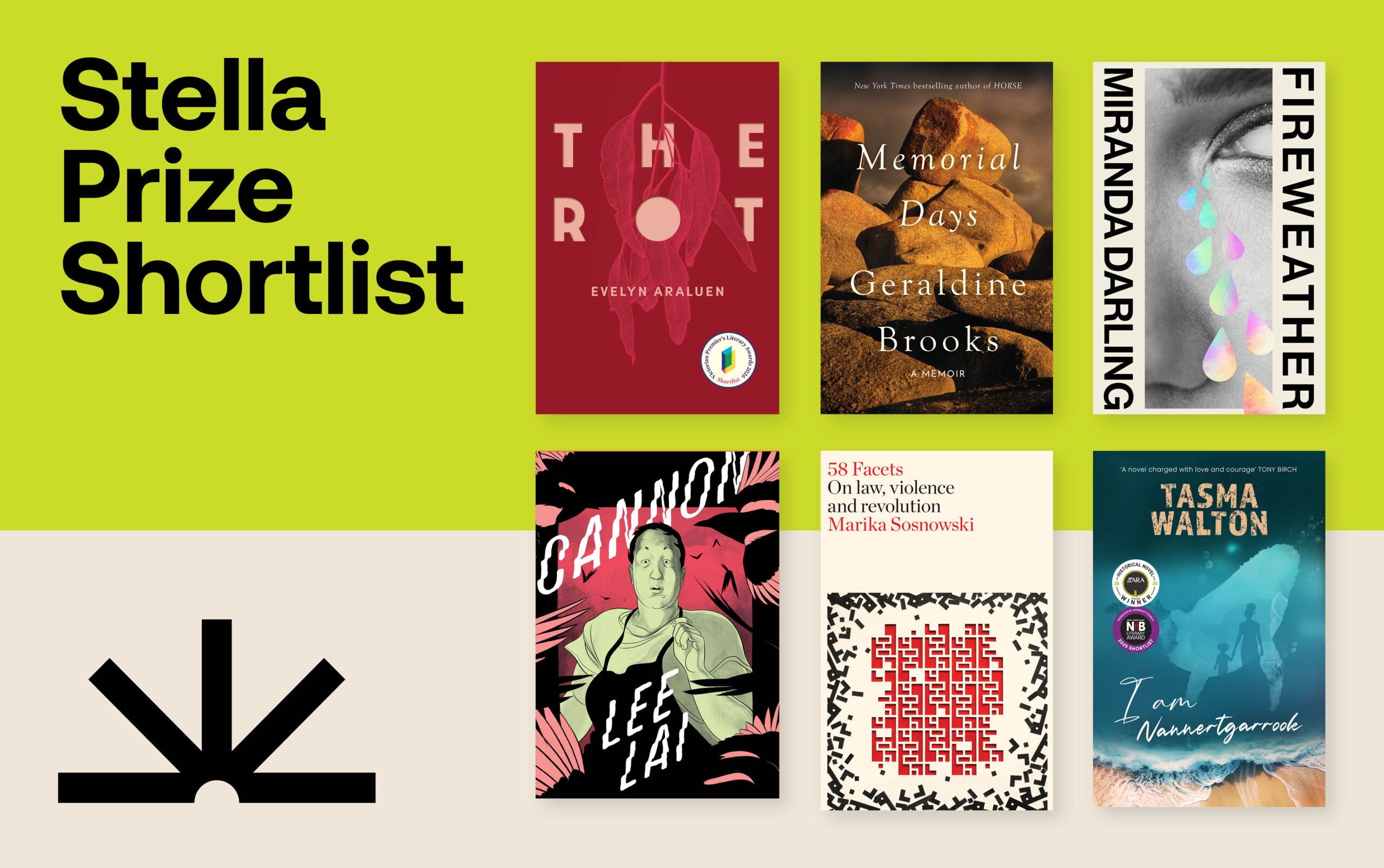
These six wonderful books reflect the creative vitality, literary rigor, and expressive richness of Australian women’s and non-binary writing. The 2026 shortlist comprises poetry, a graphic novel, a work of hybrid critical and creative writing, a memoir and two novels. Each of these gives readers an irresistible sense of being new, while at the same time showing the writers’ deep engagement and skill with their chosen genre. We encounter the thrill of innovation alongside the enduring pleasures of literary form.
With The Rot, Evelyn Araluen writes trenchantly and humorously about loss, love, violence and memory. She binds personal, intimate stories with uncompromising accounts of colonialism, capitalism, misogyny and genocide.
In 58 Facets Marika Sosnowski shows us critical writing at its best with a series of micro-essays where deeply felt emotion and personal stories share their seams with academic analysis of law, violence and revolution from 1930s Europe to the modern day Levant, to Australia’s immigration policies and COVID-19 response.
In I Am Nannertgarrook, Tasma Walton recreates the nineteenth-century stories of her Boonwurrung ancestor, coupling historical precision with page-turning narrative. The novel conveys the endurance and spiritual aliveness of whale song, motherhood, and marine life across centuries of extraction and dispossession.
Geraldine Brooks’ Memorial Days is an unforgettable memoir of grief and the possibility of re-finding oneself after shattering loss, by one of the world’s most admired and loved writers. Set across two continents, on two islands (Martha’s Vineyard and Flinders Island), the book supercharges a personal story with a novelist’s control and power.
With Fireweather, Miranda Darling plays at the edge of psychological thriller and stream-of-consciousness, constantly unsettling and discomposing the reader as she depicts the love, fear and hope bound up in motherhood and women’s lives. This is fierce, disruptive, elating prose.
In Cannon Lee Lai lets us spend time with a protagonist so reliable and responsible that her story might have gone unnoticed. Lai pushes at the visual complexities made possible in graphic narrative, giving readers a profound, disturbing, funny, shocking, surprising drama of cooking and love.
None of these books was as we expect, going in. Each of them moved us to the core through language, the truth of their emotion, and the honesty of what it means to be human, across time and space.