
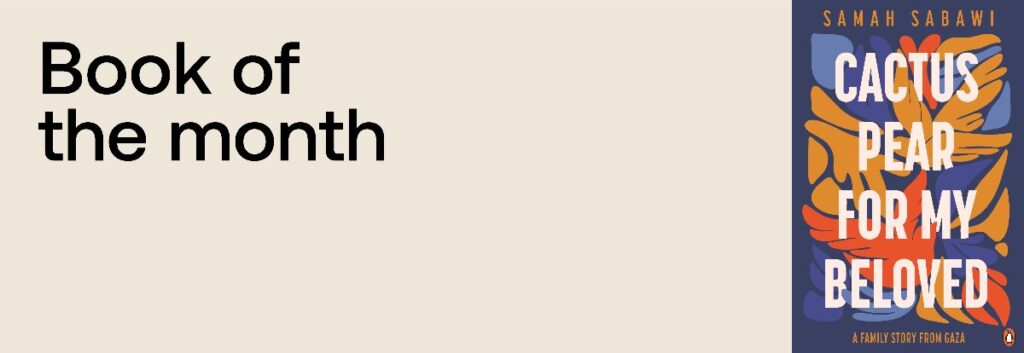
This month Stella celebrates Cactus Pear For My Beloved, shortlisted for the 2025 Stella Prize.
We spoke with Samah Sabawi about reimagining and recreating the past, postmemory and how history is inherited into family, identity, and across generations.
What are you reading at the moment?
The Weight of Witness: The Experiences of Australian and New Zealand Medics in Gaza by Dr Bushra Othman, the first Palestinian Australian woman and the first Australian Muslim woman to volunteer as a doctor in Gaza during the genocide. Othman brings together 40 testimonies from Australian and New Zealand healthcare workers who have served on the frontlines in Gaza, bearing witness to the systematic bombardment and destruction of Gaza’s life sustaining infrastructure, including its healthcare system. The book is as devastating, as it is beautiful courageous and inspiring.
How did you feel when you found out you’d been shortlisted for the 2025 Stella Prize?
I am profoundly grateful for the Stella Prize, and for the recognition and platform it has given this book. But, truthfully, that recognition has been bittersweet. The joy is real, and so is the grief that shadows it. The Stella shortlist felt like a glimmer of hope, a small spark of light. I felt deeply honoured, heard, validated, and proud. But I also found myself wondering who I could share that pride and joy with. The people for whom I wrote this book are being brutalized beyond imagination every single day. And my father, the person who took the greatest pride in every achievement of mine, had passed away.
So perhaps my hope is that this recognition allows the book to open a wider window onto a Gaza that is being erased, but whose people, stories, memories, humor, tenderness, and humanity cannot be erased.
Cactus Pear For My Beloved started as a PhD dissertation and ended as your debut novel. Why did creative non-fiction feel like the right form for this story to take?
I’m afraid I’ll have to use the cliché: the story wrote itself. And, in many ways, it also seemed to choose the form it required. I’m a very intuitive writer. I tend to write my way into the work and let the form reveal itself. In its earliest incarnation, I imagined it as a stage play. Then it became a series of interviews, then something closer to a biography, until eventually it arrived at Creative nonfiction. This seemed to naturally be the most viable form. My father’s story could never be separated from the larger story of Palestine. To tell both stories required me to move beyond the strict limits of my father’s testimony.
Also, recreating the past always involves an act of imagination. Memory is fallible. Over time, stories gather detail, mythology, poetry. They are told and retold until memory and storytelling begin to inhabit the same space. You can see that movement in the book. It begins with Khadija’s story, almost a century old, where memory has had decades to acquire a mythical texture, magical realism feels entirely natural. As the book moves closer to the present, the memories sharpen and the magic recedes; the storytelling becomes increasingly realist.
Creative nonfiction gave me the freedom to remain faithful not only to what happened, but to the way my family remembers what happened, while also allowing me to place those intimate memories within the larger historical story of Palestine. It gave me room to move between memoir, family history, documented history, and imaginative reconstruction without pretending that any one of those, on its own, could contain the whole truth.
Can you please explain the concept of ‘postmemory’ and what it felt like to apply this academic lens to a personal story?
It began with a question inspired by Edward Said’s work on exile: if exile is a condition of estrangement from land and place, how is that condition inherited by second- and third-generation Palestinians born in diaspora? This led me to Marianne Hirsch’s work on postmemory, a concept developed through her study of the children and grandchildren of Holocaust survivors. The idea that trauma can reverberate across generations and remain powerfully present in memory became central to my research.
In Cactus Pear for My Beloved, that academic concept became deeply personal. I was telling my father’s story, but I was also exploring what happens when his memories become part of my own emotional landscape. I did not experience the Nakba as he did, nor did I inhabit the Gaza of his childhood, yet those places, losses and histories have shaped my sense of self as though they were part of my own memory.
The memoir became a way of tracing that inheritance. Postmemory reveals how history does not remain in the past, but enters the family, settles into identity, and travels from one generation to the next.
My author’s note at the end of the book is perhaps the most poignant expression of this. By then, inherited memory and lived reality have collided, and the past I had spent years trying to recover is no longer simply something remembered, it has become part of the present.
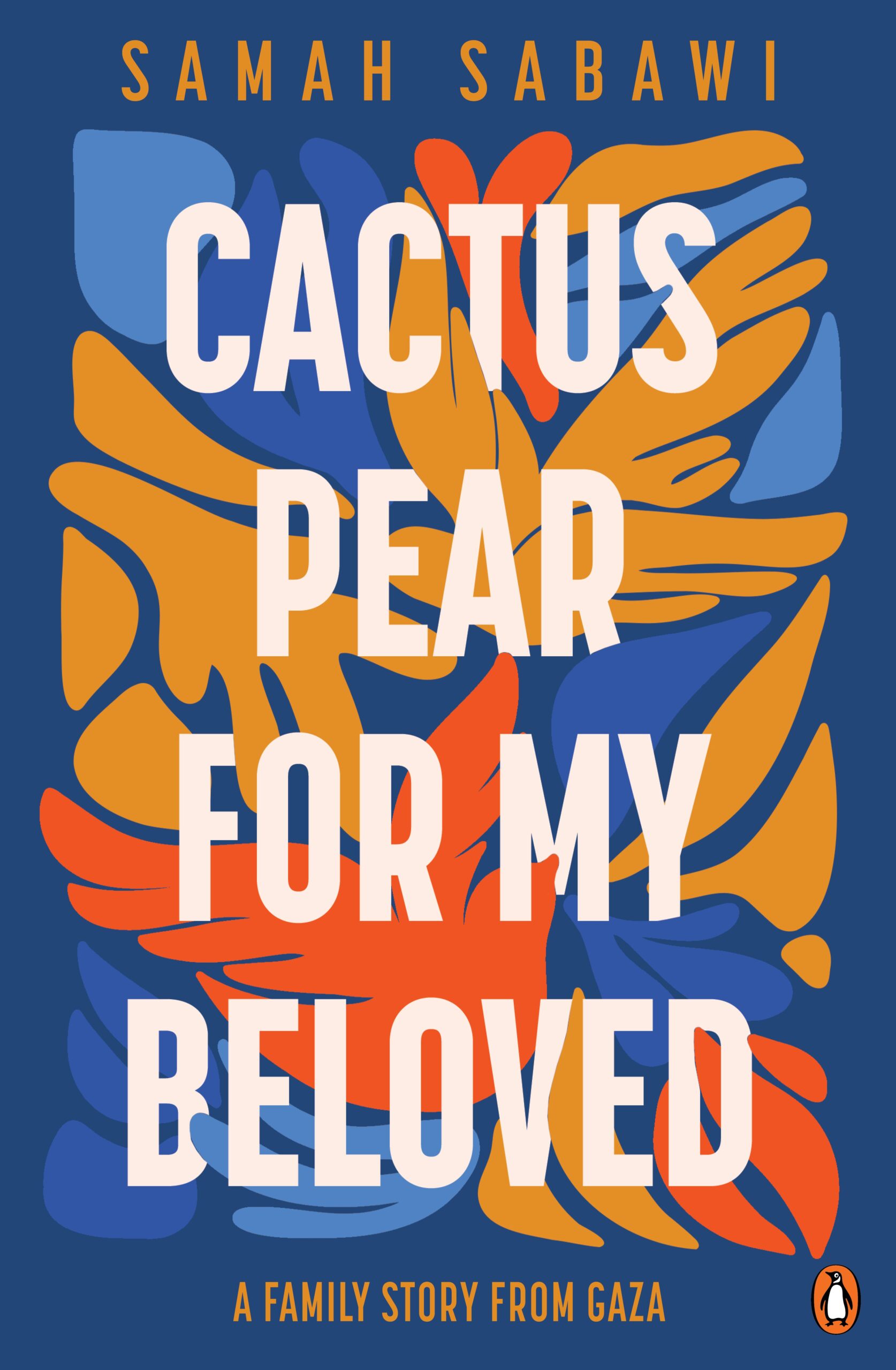
About the book
A family story from Gaza.
The story of a family over the past 100 years, starting in Palestine under British rule and ending in Redland Bay in Queensland.
Samah Sabawi shares the story of her parents and many like them who were born as their parents were being forced to leave their homelands.
Filled with love for land, history, peoples it is more than anything else a family story and a love story told with enormous humanity and feeling. How the son (one of six), born at the height of the displacements to a disabled father and illiterate mother, a believer in peaceful resistance, became a leading poet and writer in Palestine, before being forced, with his own young family in tow, to flee and start a new life in Australia.
One of the gifts of Samah Sabawi’s Baba is to remain open-hearted and optimistic.
Is interviewing and writing about family harder or easier than sources you don’t have a personal connection with? Why?
I can only speak from my own experience, and for me, interviewing my father was one of the greatest gifts to come out of this book. He was a funny, captivating storyteller. The only difficulty was that, because he was my father, boundaries were impossible. Once he began revisiting the past, he wanted to stay there. He would call at all hours, sometimes at two in the morning, because he had suddenly remembered another story I needed to record. I would try to schedule regular interview times, and he would agree, then call again five minutes later with something else. At the time, it felt consuming. I had a PhD to write and a life to live. But looking back, those interruptions are among the most precious memories I have of the process. I would do it all over again.
Judges report
The root of memoir is the proto-indo-european mer-, meaning ‘to remember’. Samah Sabawi’s latest book, Cactus Pear For My Beloved, swells larger than the bounds of individual memory. With glorious sweeping scope and a light, elegant touch, Cactus Pear is family story cum national archive; a love story for the ages, a poet’s remarkable journey, a profound act of resistance. Sabawi begins with her father in contemporary Queensland (‘You want to reconstruct my life with your words?’) then leaps back in time to his father, and his father before that, charting the life of Palestinians through her lineage and under successive Empires: Ottoman, British, the 1948 Nakba and life after. It is life that Sabawi so vividly portrays. A ‘fierce poetic duel’, family beach trips, cinnamon tea, school. History, particularly in this region of the world, is often told in dry, impersonal reports: here, Sabawi animates these epoch moments in stunning, intimate detail. Spare, gracious prose delivers Gaza not as a barren battlefield, but a people, proud and human and persisting. ‘How does love triumph over a wall,’ a character asks Samah’s father. Stories like this surely form part of the answer.
You’ve said that the book took about 10 years to write. How did you piece together a history of which parts have been intentionally erased? How did you feel when the book was finally out in the world after all this work?
One of the greatest challenges was the research itself, and the realization of how deeply Western academia had participated in the erasure of Palestinian history and narrative.
Most striking was the absences within the dominant literature on trauma. Although trauma studies expanded from its early focus on the Holocaust to encompass other histories of war and collective suffering, the Palestinian Nakba, literally, the “catastrophe” was rarely incorporated into this supposedly universal trauma genre, despite the scale and persistence of Palestinian dispossession. In that sense, erasure becomes a second injury. Palestinians experience displacement and dispossession, and then the language through which that suffering might be recognized as trauma is denied to them. This is where personal testimony became so important to me. My father’s interviews formed the foundation of the book, and they also became a form of decolonized research: when official histories and academic frameworks fail to register an experience, family stories and individual testimony become historical evidence. They restore texture, emotion, memory and human presence to what has been flattened or omitted.
The book took so long because I was working on several levels at once. There was the academic research, the historical documentation, the work of placing my father’s memories within the correct historical context, and then the enormous task of shaping the interviews into a coherent narrative. I read across histories of Palestine and Gaza, constantly checking and cross-checking dates, events and sources. There is remarkably little written about everyday life in Gaza City in certain periods, particularly the 1950s and 1960s, which are central to the book. So at times I felt I was searching for fragments, small historical gems, and trying to bring them into conversation with my father’s memory.
I felt a tremendous responsibility to be faithful both to the historical record and to the lives I was writing about. In that sense, writing the book became an act of preservation: carrying these stories forward in the face of erasure.
When the book was finally out in the world, the feeling was difficult to separate from everything that had happened during those ten years that ended with the first year of the genocide in Gaza. By the time the book appeared, the Gaza I had spent years reconstructing on the page was itself being erased. So, publication did not feel like an ending. If anything, it made the work feel more urgent. The book had become a record of a world I had tried to recover, and, in some small way, to keep alive.
The book recounts Gaza’s devastating history while also showing the immense love, creativity and joy that exists there. Why is it crucial to tell human stories alongside political ones?
Beyond devastation, Gaza’s history is also one of resurrection and renewal. For more than 5,000 years, Gaza City has sustained continuous urban life, enduring destruction and rebuilding without surrendering its continuity. Its people carry that history within them: a profound capacity to rise after catastrophe and continue creating, loving, laughing, making art, raising children, cooking and dreaming. Human stories restore what political language so often erases: complexity, intimacy, contradiction, humor, beauty, and the textures of ordinary life.
In this book, I have tried to tell the human story alongside the political one as a way of insisting on the fullness of Palestinian life. What is being destroyed is not an abstraction or merely a political problem, but a living world. And in this book, I hope to show how even in the midst of catastrophe, that world continues to assert itself.
Your father, Abdul Karim Sabawi, died shortly after publication, but not before reading the book and attending the launch. How did he react to it all?
He was immensely proud and listened to the audiobook on a loop. But I think he also felt that his work was done, that he had given me the story and could now let go. He passed away three weeks after the book launch.
Cactus Pear For My Beloved, swells larger than the bounds of individual memory.
2025 Stella Prize judges
How did and do you take care of yourself while delving into traumatic, personal topics?
There is no real “delving into” trauma, because the trauma has not ended. The genocide continues. It remains a backdrop to everyday life. We learn to laugh and cry, to grieve and rejoice, to gather for weddings and funerals, to stand for what we believe in, to bear witness, to support one another, and above all to hold on to our faith in our own humanity. So, self-care, for me, is not about stepping outside the trauma so much as finding ways to remain human within it: family, love, laughter, work, faith, community, and the act of creating itself.
What’s next for you? Tell us about any recent and upcoming projects.
I’m very proud to say that I have just released my first film, a short Palestinian animation titled All We Have. It is a tender story about love, memory and resistance, set against the violence of imprisonment and dispossession. At its heart, the film asks what remains when so much has been taken away, and finds its answer in the things that cannot so easily be destroyed: love, imagination, memory and the will to remain human.
The film has now begun its journey through festivals and community screenings, and I’m very excited to see it finding audiences in different parts of the world. For the moment, much of my energy is going into that journey, bringing All We Have into conversation with audiences and seeing where it travels next.
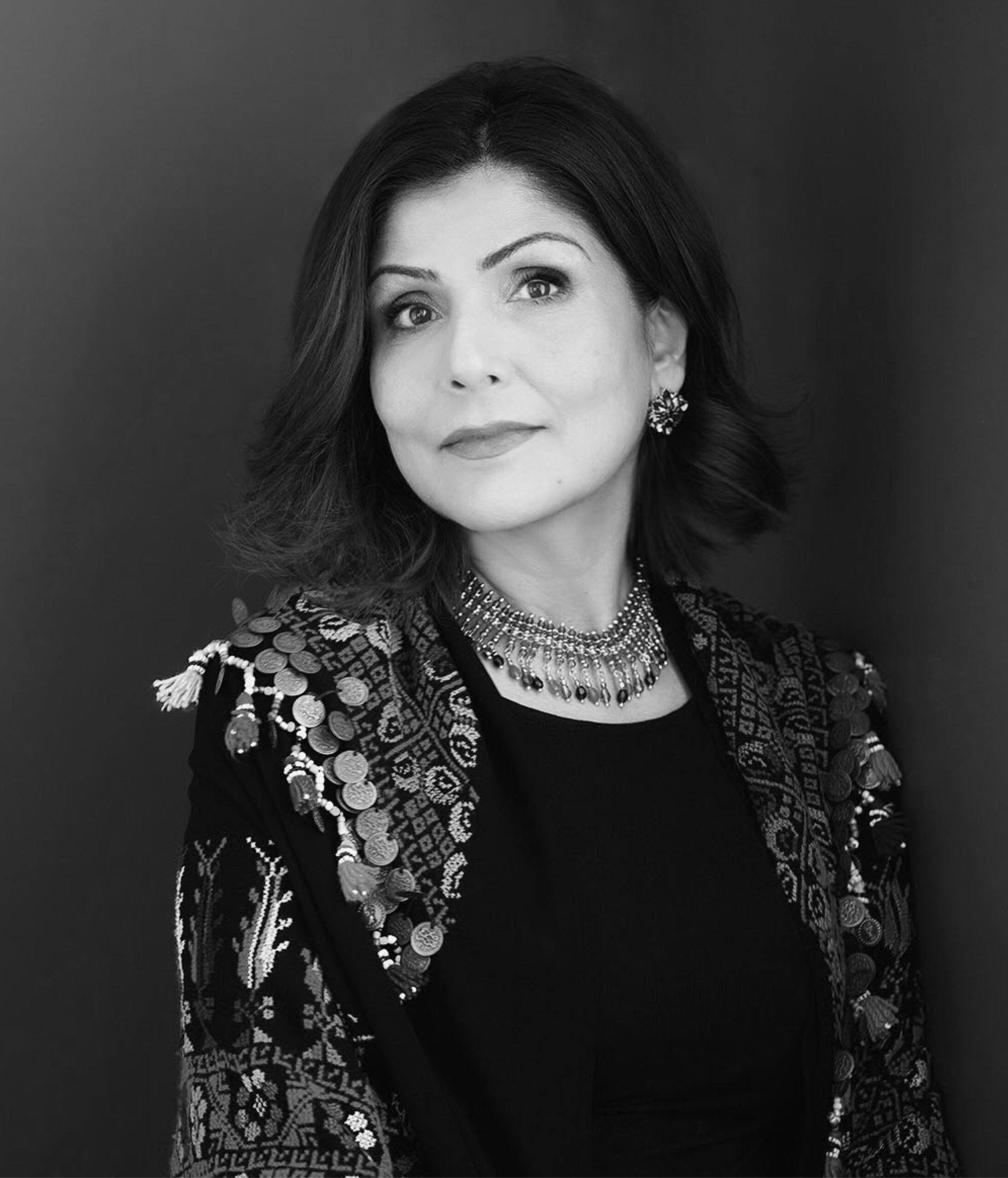
About the author
Samah Sabawi
Further Reading
Reviews
“Sabawi takes a leap of faith in publishing her project to a larger audience beyond academia, and it pays off.” Valerie Chidiac Honi Soit
“Amid the tragedy and betrayal of international interventions and invasion, personal hardships are softened by humour, love, scholarly meditations and the poetry of the Quran.” Monique Grbec The Saturday Paper
Links
Read an interview with Samah Sabawi on Words Without Borders
Explore the latest from Stella
This month Stella celebrates Cactus Pear For My Beloved, shortlisted for the 2025 Stella Prize. We spoke with Samah Sabawi about reimagining …
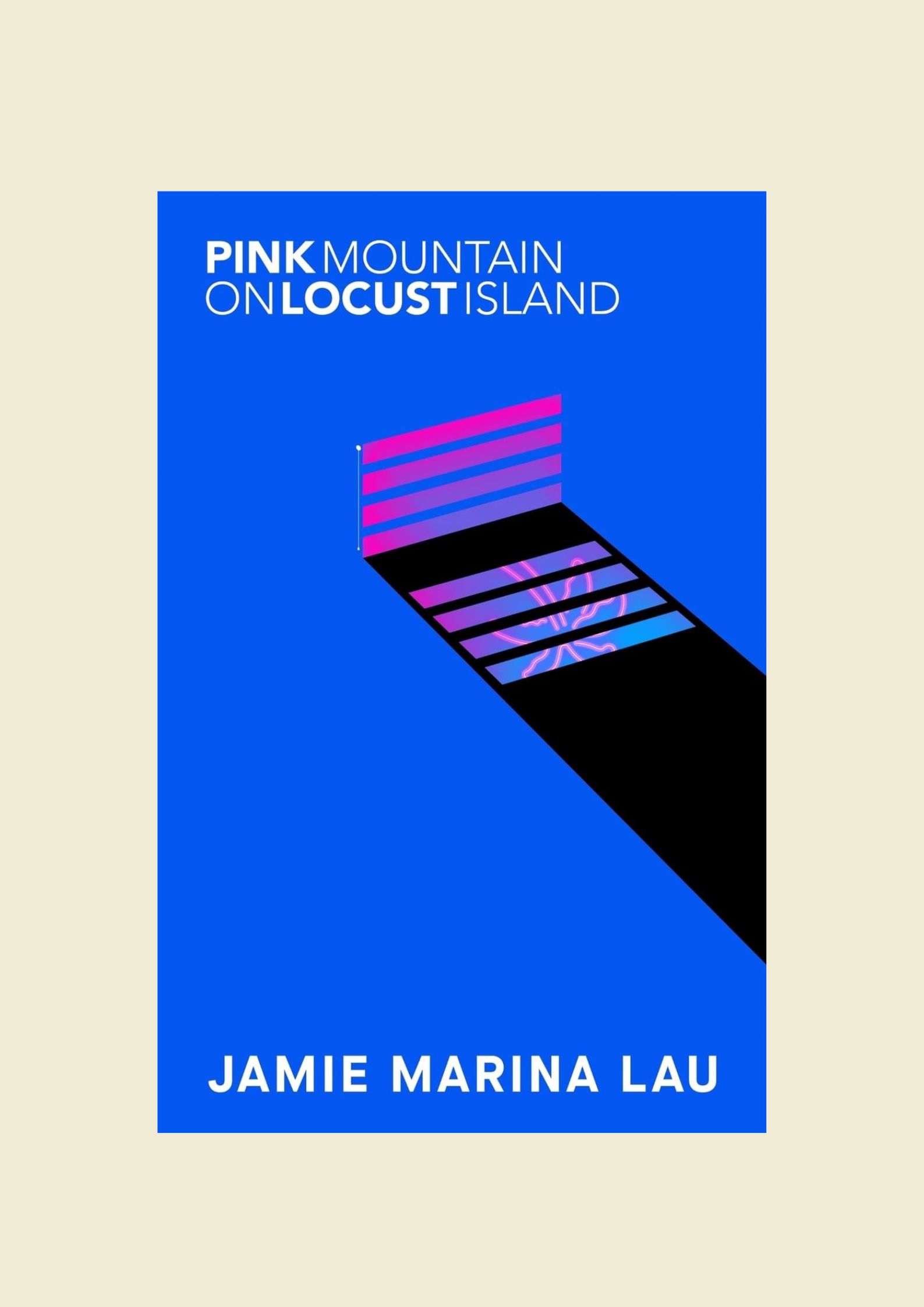
This month Stella celebrates Pink Mountain on Locust Island, shortlisted for the 2019 Stella Prize. We spoke with Jamie Marina Lau to …
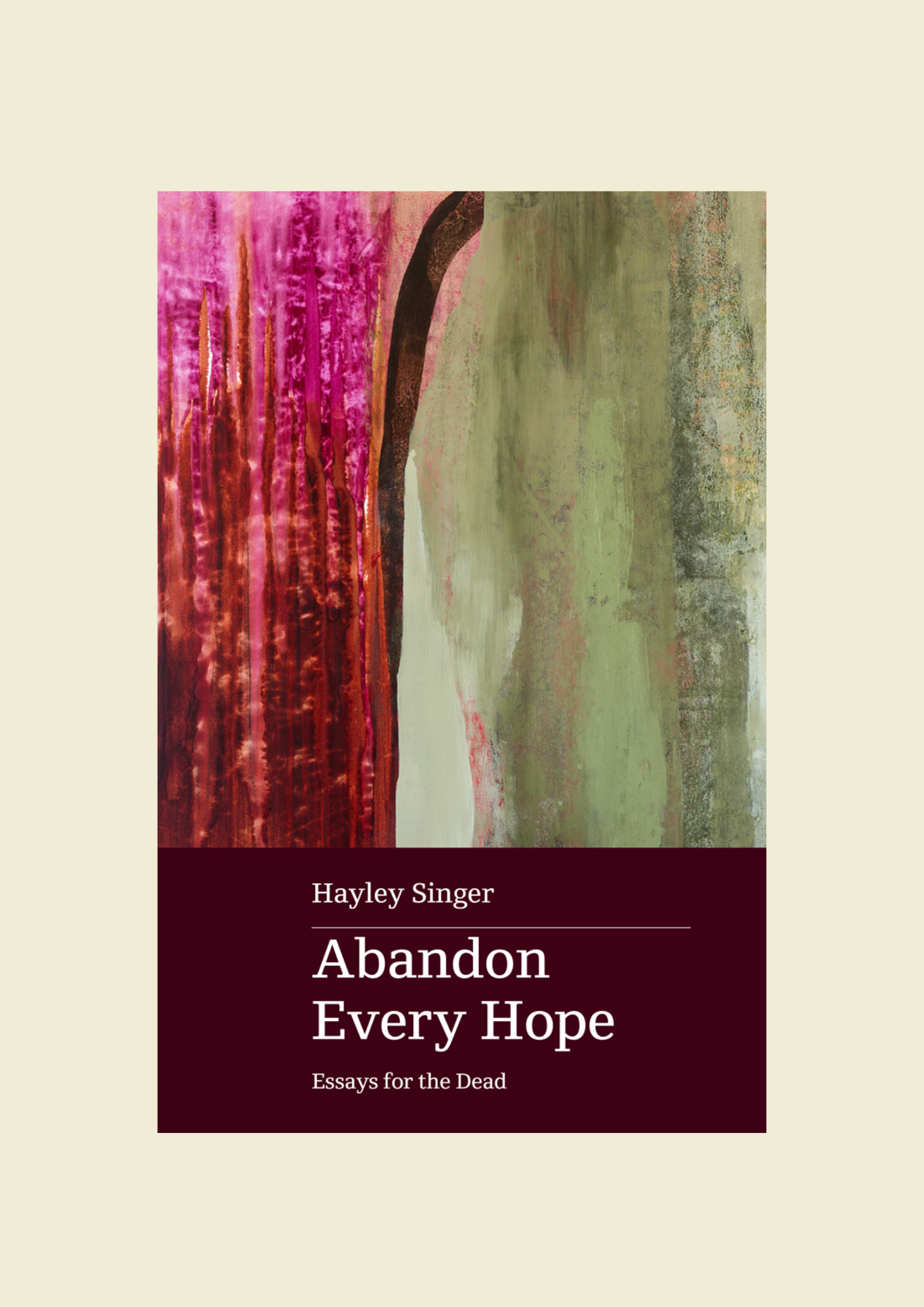
This month Stella celebrates Abandon Every Hope: Essays for the Dead, shortlisted for the 2024 Stella Prize. We sat down with Hayley …
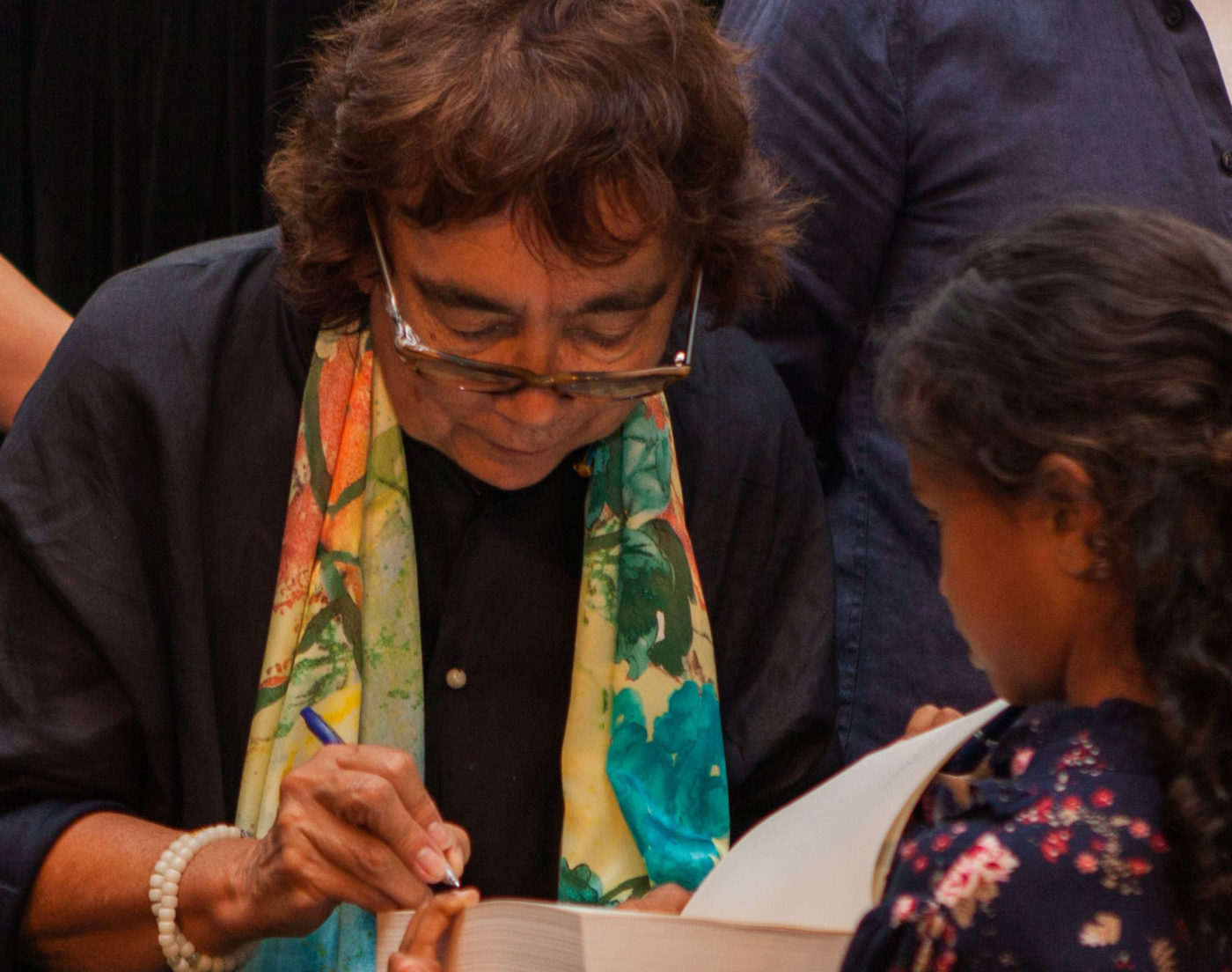
Help change the story
As a not-for-profit organisation with ambitious goals, Stella relies on the generous support of donors to help fund our work.
Every donation is important to us and allows Stella to continue its role as the leading voice for gender equality and cultural change in Australian literature.
Stella is a not-for-profit organisation with DGR status. All donations of $2 or more are tax-deductible.
SUBSCRIBE
Join our mailing list to stay up-to-date on Stella news, events and opportunities
Stella is grateful to the ongoing generosity of our supporters:
CONTACT STELLA
The Stella Prize Inc
info@stella.org.au
ARBN: 657 317 283
Stella acknowledges the Traditional Owners of the land throughout Australia and recognises their continuing connection to land, waters, community, and culture.
We pay our respect to Elders past and present and, through them, to all Aboriginal and Torres Strait Islander people.
Website design canyonbrand.com