Shortlisted for the 2026 Stella Prize

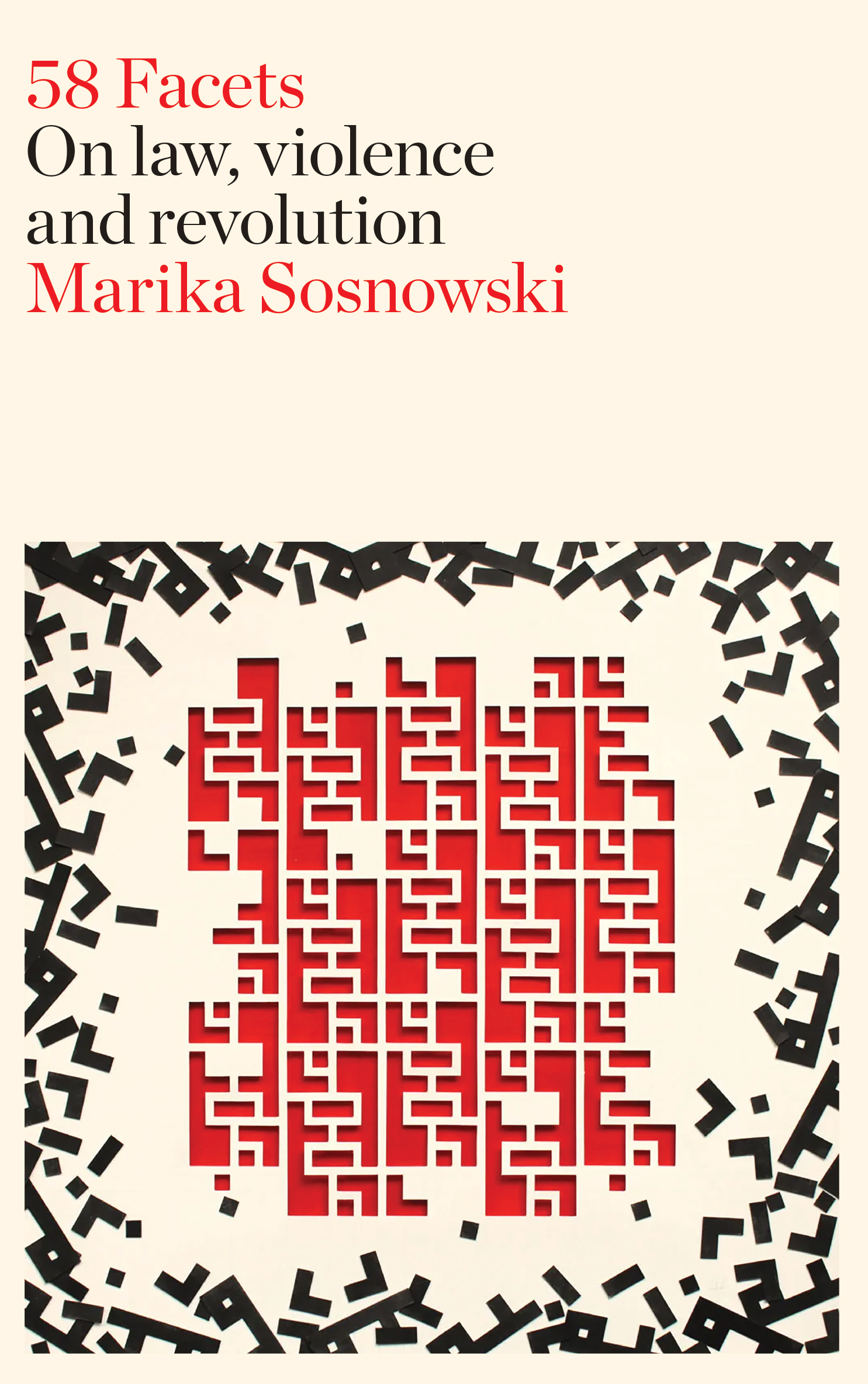
Marika Sosnowski – 58 Facets: On violence and the law

Nonfiction · Melbourne University Publishing

About the Book

A poetic and precise meditation on resistance and revolution, and how we create a story we can live with in their aftermath.

When you have been forcibly displaced from your home, the revolutionary dream of what should have happened … stays alive as a utopian beacon of happiness that will (possibly) never come to pass. To be content and make a meaningful life from the ruins of that wrenching and uprooting is a small, everyday miracle that others easily overlook.

58 Facets is like a beautifully cut jewel, the kind Marika Sosnowski’s grandfather would have bought, cut and sold after he arrived in Melbourne in 1947, having passed through a checkpoint minutes ahead of Nazi occupiers, via a Japanese internment camp in Java and a migrant accommodation camp just outside of Brisbane. If you hold it up to the light you will catch different stories in each of its many facets. You will have the table, the bezel, the star and the upper girdle, the lower girdle, the pavilion and the culet. You will have the dreams, the checkpoints, the documents, the bribes, the camps, the occupation and the resistance.

Part memoir, part exposé, 58 Facets weaves together the narratives of Holocaust survivors and Israeli war criminals with Syrian activists, revolutionaries and dissenters. It challenges us to go beyond the links we see in our lives to our felt experiences of the law, violence and revolution, and how these experiences travel across bodies, space and time. 

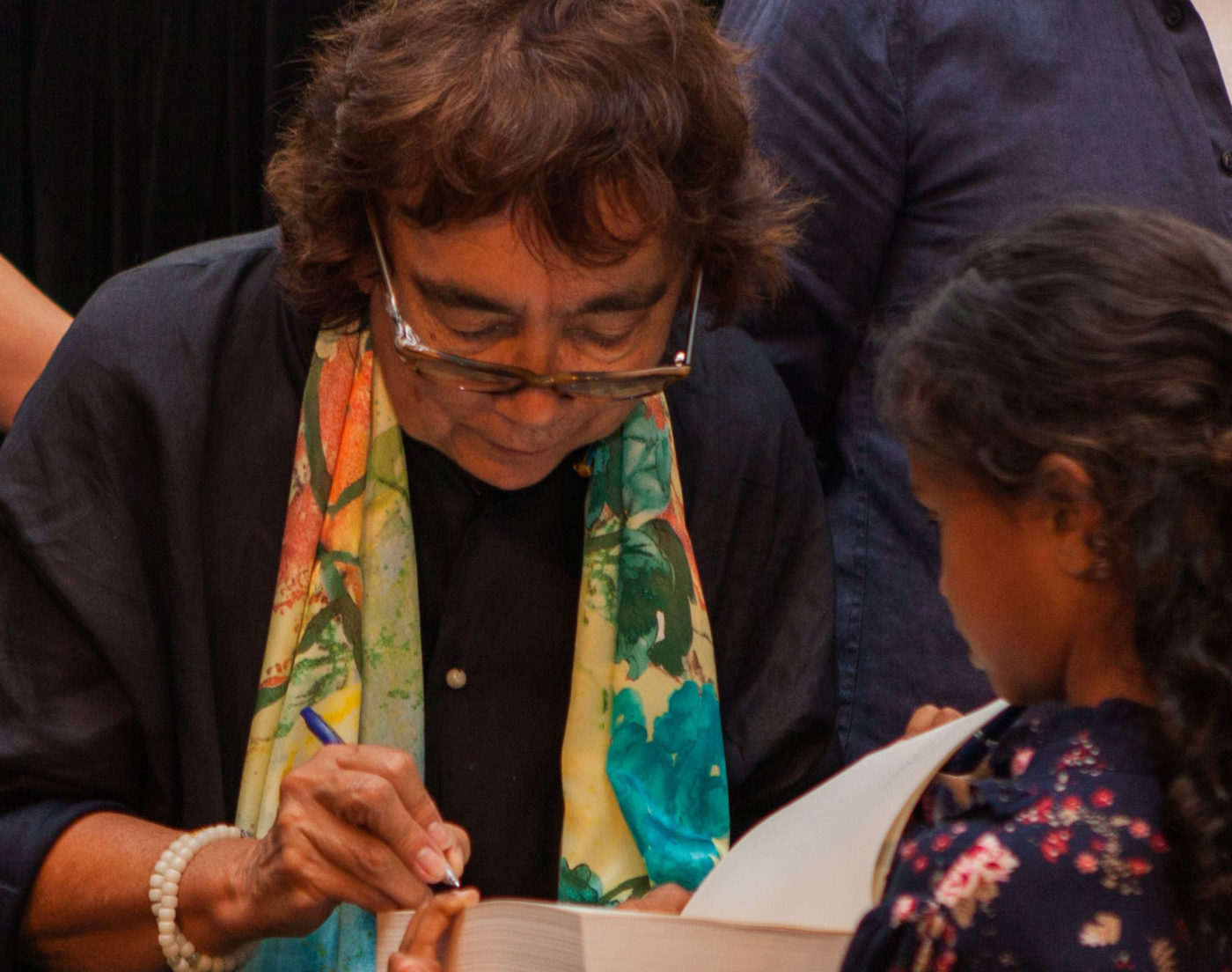
Your Image

“With devastating efficiency and clarity, Sosnowski connects dots across time and history, and repeatedly forces the reader to stop in their tracks and reconsider their own story.”

– 2026 Stella Prize Judges

About the Author


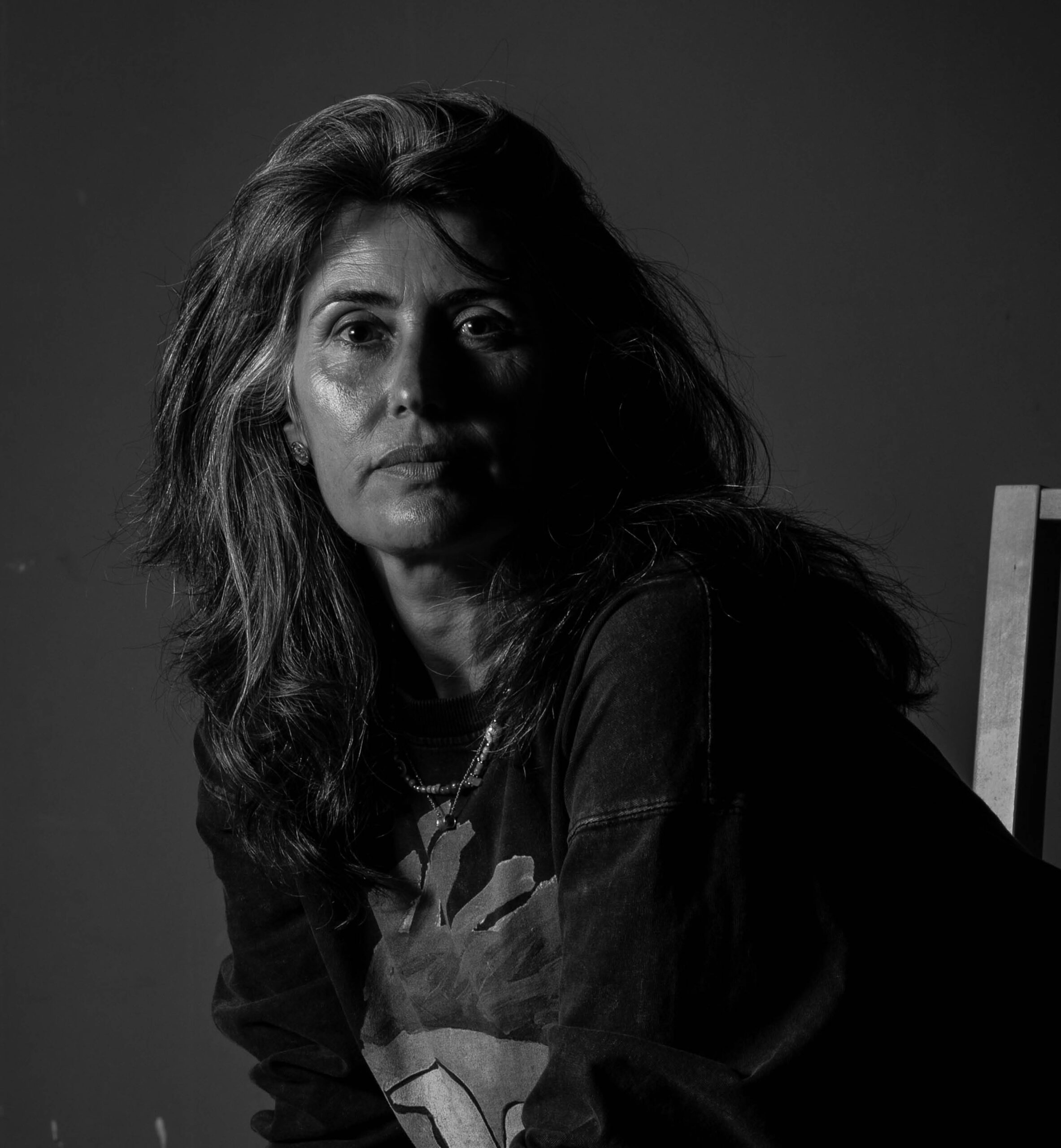
Marika Sosnowski

Marika Sosnowski is a legal anthropologist at Melbourne Law School and the granddaughter of Polish and Dutch Holocaust survivors. She went to Syria in 2007, primarily to eat makdous, hummus and ghazl al banat, and has worked on Syria – its revolution, war, governance and legal systems – ever since.

Interview with Marika

What are some of your earliest memories of reading?

My earliest memories of reading were being swallowed up by the power of stories and struggling to come back to “real life”. I still regularly have that problem.


Is there a book that dramatically changed your view on the world?

There are so many works that have influenced how I think about the world. Some recent ones are:

Ta Nehisi Coates’ The Message

Isabella Hammad Recognizing the Stranger: On Palestine and Narrative

Robin Wall Kimmerer Braiding Sweetgrass

Richard Flanagan Question 7

Nick Sousanis Unflattening

At the moment, Garrett Bucks’ substack, The White Pages, keeps me going.


What Stella listed book from the last 14 years do you think everyone should read?

Everyone should read Maria Tumarkin’s book Axiomatic (shortlisted for the 2019 Stella Prize). Maria (and this book) were instrumental in making me think about academic writing in a different way.


What’s a quote about either your book or the role of literature in shaping culture? 

Right now, only art and literature can save us. Maybe ice cream too.


What do you hope readers take away from your book? 

I hope reading my book gives you more empathy, makes you more curious, opens you to unusual connections and the wonder of the world and its workings.


How are you celebrating being shortlisted? 

I’m just walking around feeling very happy!


Further Reading


Reviews 

Ambitious, expansive and infused with deep wisdom, 58 Facets is a moving testament to our common humanity. – Kylie Moore-Gilbert

58 Facets poses a multi-disciplinary challenge to its readers – if laws are not challenged they remain lifeless and static. Progress is neither linear nor inevitable. It happens because people make it happen – when inspired by books like this. – Jon Faine

Links 

Read Marika’s essay in The Conversation.

Listen to Marika’s episode of the Stories Behind the Story podcast.

Judges’ Report


Explore the latest from Stella

From the 2026 Stella Prize Chair of Judges, Sophie Gee What an honor to be standing in this room of distinguished Australian …

This month Stella celebrates Rapture, longlisted for the 2025 Stella Prize.  We sat down with Emily to discuss character building in historical …

My business is more with pictures, rather than words, and so I’m nervous to give this speech, especially in a room with …

Help change the story

As a not-for-profit organisation with ambitious goals, Stella relies on the generous support of donors to help fund our work.

Every donation is important to us and allows Stella to continue its role as the leading voice for gender equality and cultural change in Australian literature.

Stella is a not-for-profit organisation with DGR status. All donations of $2 or more are tax-deductible.