
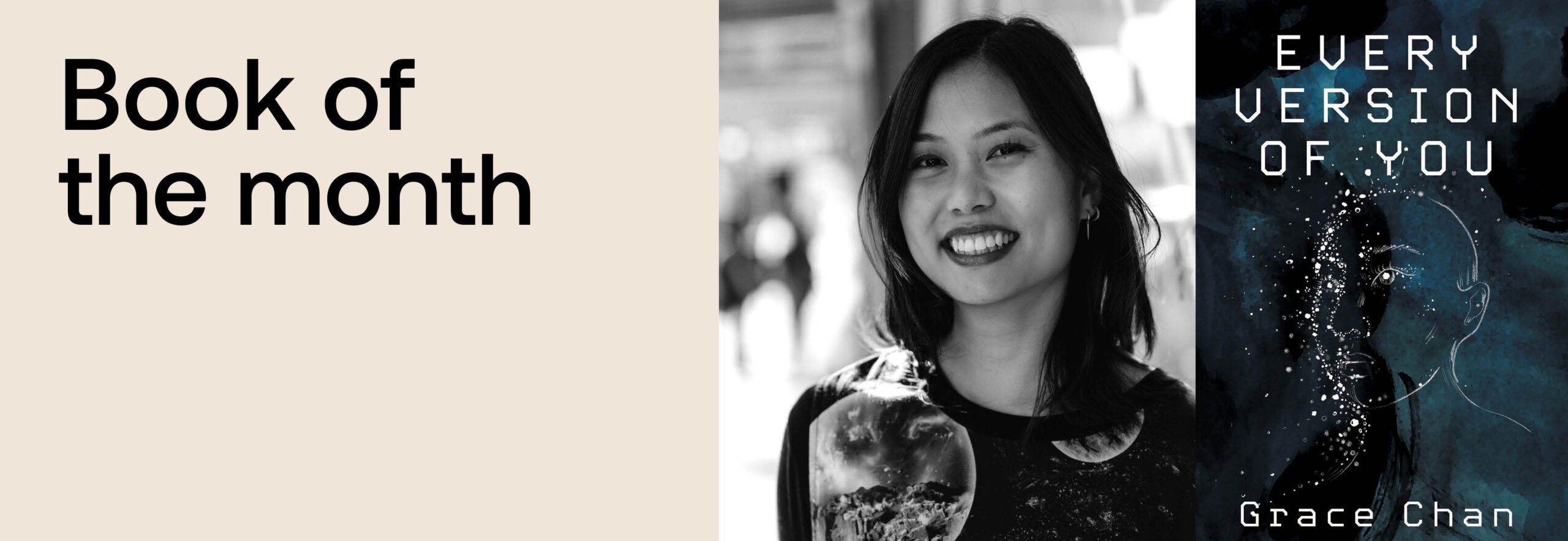
This month Stella celebrates Every Version of You, longlisted for the 2023 Stella Prize.
We sat down with Grace Chan to discuss the speculative fiction ecosphere in this technological interview for our blog. Read below.
What are you reading at the moment?
I’ve recently finished The Way Spring Arrives and Other Stories, a collection of translated Chinese speculative fiction stories by female and non-binary creators. More than a few of the stories blend folklore and modernity, shaping a science fiction where time feels vast, layered, and circular.
Reading short speculative fiction, especially from non-Western writers, always revives and inspires me to push my craft in new directions. Novels are excellent; there’s nothing quite like a novel! But the short story ecosphere is a blossoming petri dish for experimentation in concept, structure, and form.
I’ve been particularly obsessed with how structure can reflect theme and tone. This comes off the back of watching movies like Parasite and The Handmaiden; discovering the compelling nature of serialised sagas in K-dramas, C-dramas, and anime; and studying Henry Lien’s The Art of Eastern Storytelling, where he explores circular, nested, four-act structures and more. I’ve also been contemplating patchwork narratives attached to artefacts, such as you might find in an escape room, and narrow or deceptive point-of-views from trickster characters, who make us enjoy having the rug pulled from beneath us. I’m keen to play with structure and perspective as a key element of storytelling, to subvert expectations, astonish, frighten, and delight.
Do you remember how you felt when you found out you’d been longlisted for the 2023 Stella Prize?
I remember the moment vividly! I checked my email on my phone while waiting for a friend. The shock went through my body from head to toe. I hadn’t known that my publisher had entered it for the Stella. I hadn’t yet been listed for any other awards. Up until then, I hadn’t really believed my book could be “literary”. It was incredibly affirming to discover that Every Version of You had been read by these wonderful judges and thought to be a valuable contribution to our literary landscape, alongside such a brilliant list of writers.
The Stella longlisting continues to be a source of encouragement to me.
Even more importantly, the longlisting felt like a win for science fiction in Australia. There’s still a broad misconception that science fiction is just escapist irrelevance that doesn’t have anything interesting to say. I hope this perspective will soon be relegated to the past. Speculative stories—even, or especially, the ones with spaceships and robots and aliens—can hold a strange, unique mirror up to our society and stir us with their intimacy and profoundness.
Tell us a little bit about how Every Version of You came to fruition. What inspired you to start writing it?
I enjoy using fiction to explore how hypothetical technologies might change people and society; I also love pondering how relationships morph over time, and the interplay of attachment versus self-actualisation. Every Version of You began as an exploration of “mind uploading” through the lens of a romance between Tao-Yi and Navin, who love each other but are on very different personal trajectories. What sort of things might make someone choose to upload their mind? On an individual level: illness, pain, escape, illusion, delusion? On a societal level: climate change, collective denial, convenience, capitalism?
Another quiet theme running through Every Version of You is that of impermanence. Writing the book was a philosophical and personal meditation on change and loss. I think many readers have found solace in this aspect of the book.
2023 Stella Prize Judges
Were there any moments in the writing process where the story went in a completely different direction than you originally planned?
The short answer is no, which is surprising! The story changed shape throughout many iterations, but the bones remained the same. Although I’m a structured writer on the surface, I’m intuitive to the marrow: I follow the ideas and plot twists that most compel me, even if I don’t entirely know why.
Characters take shape from my subconscious; the decisions they make feel engraved in stone from the beginning.
When I’m writing that first draft, I’ll typically sketch out the acts in broad strokes, knowing where I want to land (plot-wise and vibes-wise) at each stage. Then I’ll work through the writing itself to understand the story in gritty detail. Each character’s role and fate in Every Version of You remained unchanged: those who uploaded, those who didn’t, and those who pulled Tao-Yi in different directions.
Judges Report
This speculative fiction is set in a re-imagined Australia that is culturally rich and actually reflective of real everyday Australians, rather than the generic, watered-down, Neighbours version of our country. There is a true sense of human beings grappling with issues that are universal, but complicated and enriched by their specific backgrounds.
Among a lot of high-stakes speculative fiction produced on this continent, Chan’s portrayal of everyday life in a technopolis is refreshing in its quiet ambition. She taps into issues of the metaverse, illness, and cyborgism to bring these ideas a new significance to our own lives.
With AI looming over us, and facial reconstruction becoming a matter of when, not if, Every Version of You doesn’t feel as far-fetched as one would like to think. What do you hope readers take away from your book?
It’s something that we’re all navigating. The technology, and the conversation surrounding it, has already progressed in leaps and bounds since Every Version of You came out in 2022. When I wrote the book, I was thinking about what we sacrifice when we accept various technologies into our lives, and what compels us to keep using technologies that aren’t good for us or the planet.
We are lured by convenience and ease, by the false promise of a leisure-filled, aesthetic, successful, “productive” life. What do we trade? Our relationship to our bodies, our time, our privacy and that of our loved ones, the environment, sustained focus, deep relationships. A reader sent me a lovely message this week that phrased it perfectly: “I feel this myopic, helpless drifting along of everyone around me…no one is really enthusiastic about using these tools, yet the situation is a standoff against everyone else: adapt or be left behind.”
Writing the book helped me to consider what kind of technologies I want to accept into my life—whether they are life-expanding or life-diminishing. I hope readers take away something similar.
How did your work as a psychiatrist help (or hinder) your writing of this book?
I often say that my writing and my psychiatry work are branches that grow from the same tree: both pursuits spring from my fascination with understanding the human mind. But the two hats are quite separate. Psychiatry has given me ways of thinking about mental illness, our conscious and unconscious selves, attachment, and neurobiology.
At the same time, psychiatry is rooted in the medical model, is still shedding its controversial history, and uses subjective and limited frameworks. There is helpful knowledge, but it’s also just one mode of thinking. So: psychiatry helped me to invent the “science” of uploading in Every Version of You, amongst other useful things—but I wrote this book not as a psychiatrist, but as a human being.
About the Book
In late twenty-first century Australia, Tao-Yi and her partner Navin spend most of their time inside a hyper-immersive, hyper-consumerist virtual reality called Gaia. They log on, go to work, socialise, and even eat in this digital utopia. Meanwhile their ageing bodies lie suspended in pods inside cramped apartments. Across the city, in the abandoned real world, Tao-Yi’s mother remains stubbornly offline, dwindling away between hospital visits and memories of her earlier life in Malaysia.
When a new technology is developed to permanently upload a human brain to Gaia, Tao-Yi must decide what is most important: a digital future, or an authentic past.
Never Let Me Go meets Black Mirror, with a dash of Murakami surrealism thrown in, this is speculative literary fiction at its best.

About the Author
Grace Chan
Grace Chan is a speculative fiction writer and psychiatrist. Her writing explores brains, minds, technology, relationships, and identity. Her short fiction can be found in Clarkesworld, Lightspeed, Going Down Swinging, Aurealis, Andromeda Spaceways, and many other places. She has been shortlisted for the Aurealis Awards, the Norma K Hemming Award, and Viva la Novella. Her debut novel, Every Version of You, is about staying in love after mind-uploading into virtual reality (Affirm Press, 2022).
Further Reading
Reviews
“Every Version of You is generous in its propositions; if not hopeful for humankind, it speaks of the indeterminate value of the human soul.” – Megan Cheong, Meanjin
“With an intriguing blend of cli-fi, philosophy of mind and transhumanist themes, Grace Chan’s novel delivers striking science fiction steeped in absurdity and dystopian menace.” – Fiona Capp and Cameron Woodhead, The Age
“Where a lesser novel might set up an existential showdown between the devil we know and the one we don’t, Every Version of You asks us to make peace with the ambiguities within ourselves.” – Alan Vaarwerk, Kill Your Darlings
Listen to Grace Chan on ABC Radio National’s The Book Show
Read an interview with Grace Chan on Liminal
Hear Grace Chan on The Regular Podcast with Words and Nerds
Explore the latest from Stella

This month Stella celebrates Every Version of You, longlisted for the 2023 Stella Prize. We sat down with Grace Chan to discuss the …
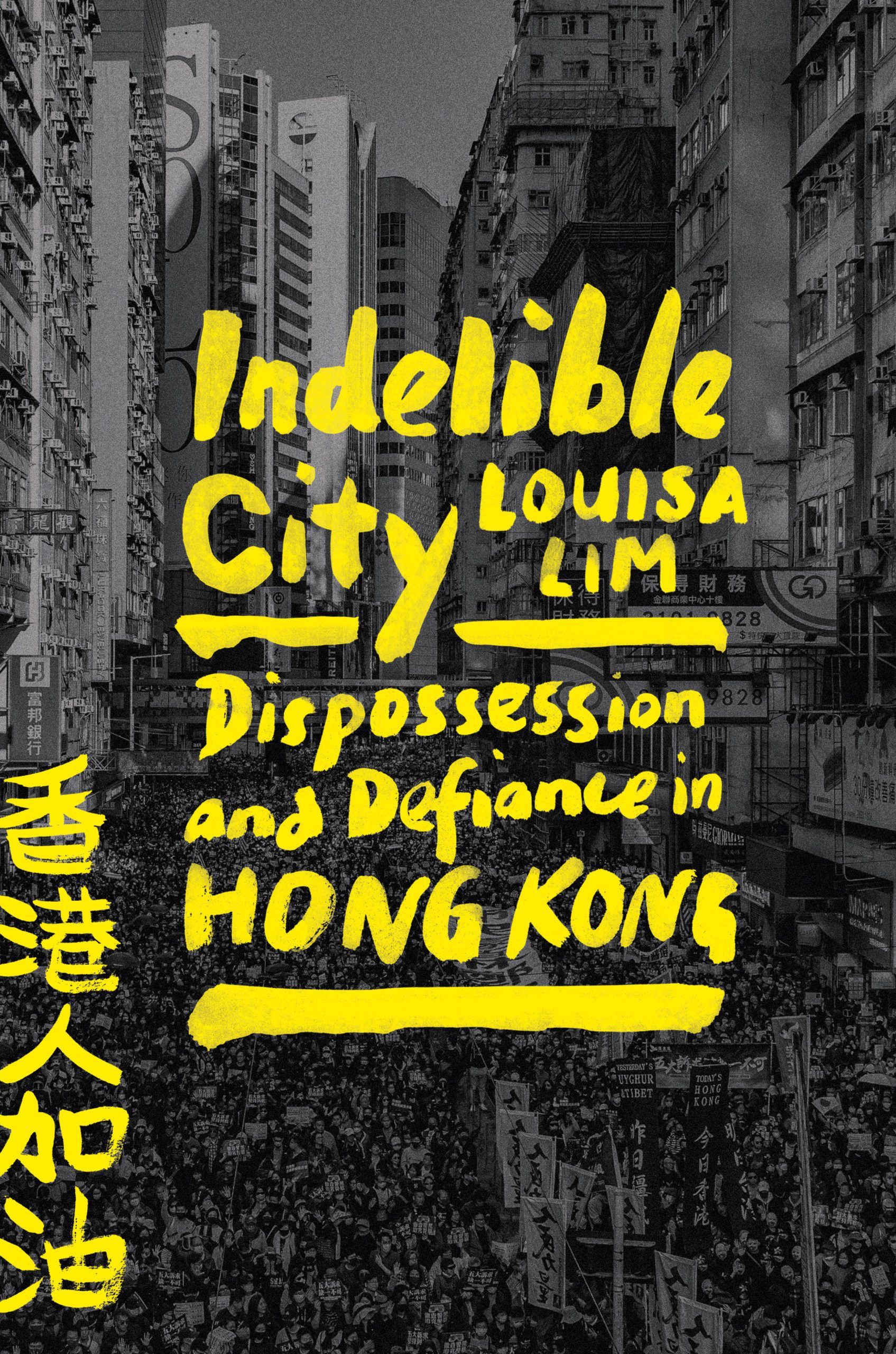
This month Stella celebrates Indelible City: Dispossession and Defiance in Hong Kong, shortlisted for the 2023 Stella Prize. We sat down with …
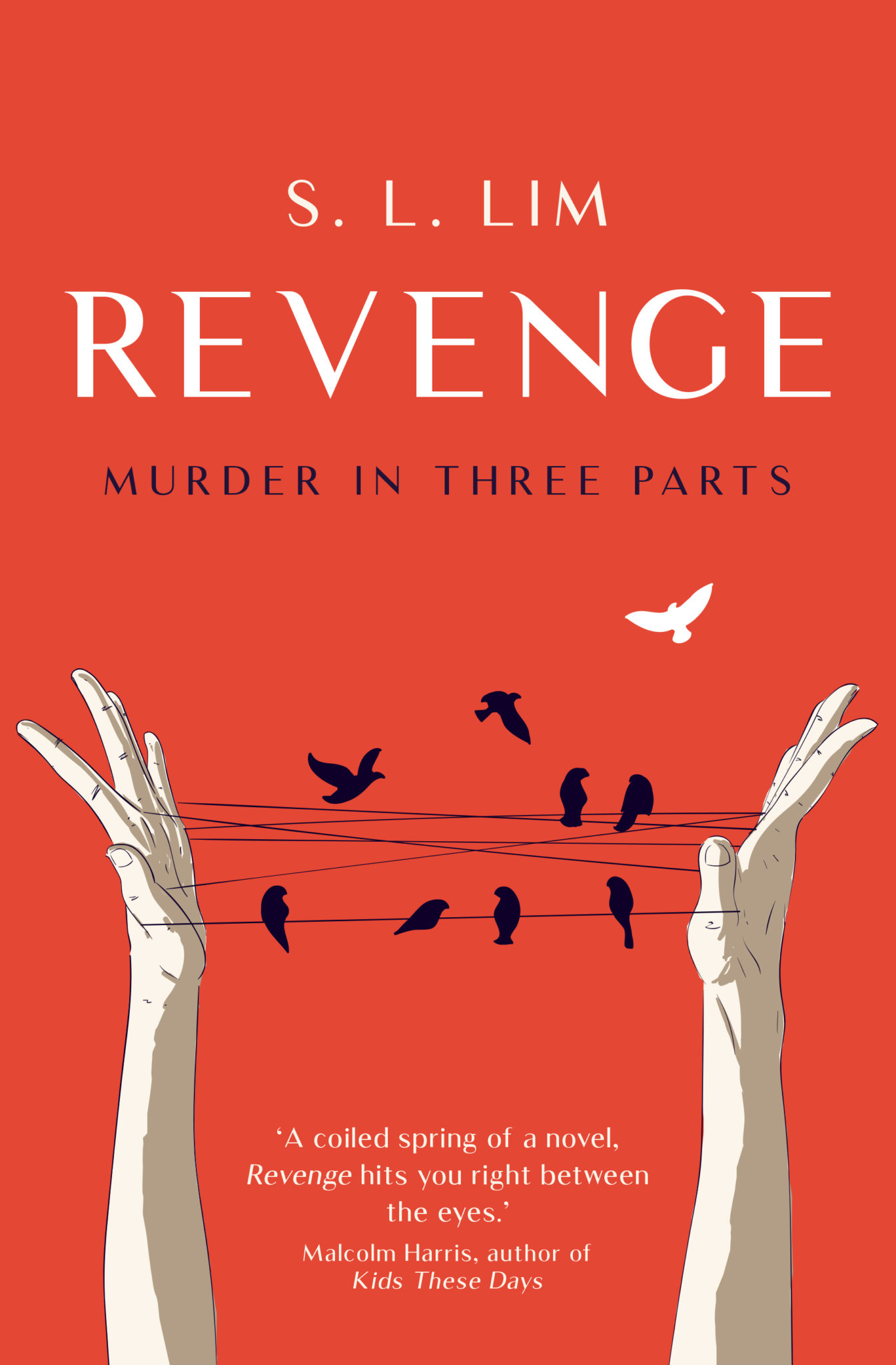
This month Stella celebrates Revenge: Murder in Three Parts, shortlisted for the 2021 Stella Prize. We sat down with S.L. Lim to …
Help change the story
As a not-for-profit organisation with ambitious goals, Stella relies on the generous support of donors to help fund our work.
Every donation is important to us and allows Stella to continue its role as the leading voice for gender equality and cultural change in Australian literature.
Stella is a not-for-profit organisation with DGR status. All donations of $2 or more are tax-deductible.
SUBSCRIBE
Join our mailing list to stay up-to-date on Stella news, events and opportunities
Stella is grateful to the ongoing generosity of our supporters:
CONTACT STELLA
The Stella Prize Inc
info@stella.org.au
ARBN: 657 317 283
Stella acknowledges the Traditional Owners of the land throughout Australia and recognises their continuing connection to land, waters, community, and culture.
We pay our respect to Elders past and present and, through them, to all Aboriginal and Torres Strait Islander people.
Website design canyonbrand.com